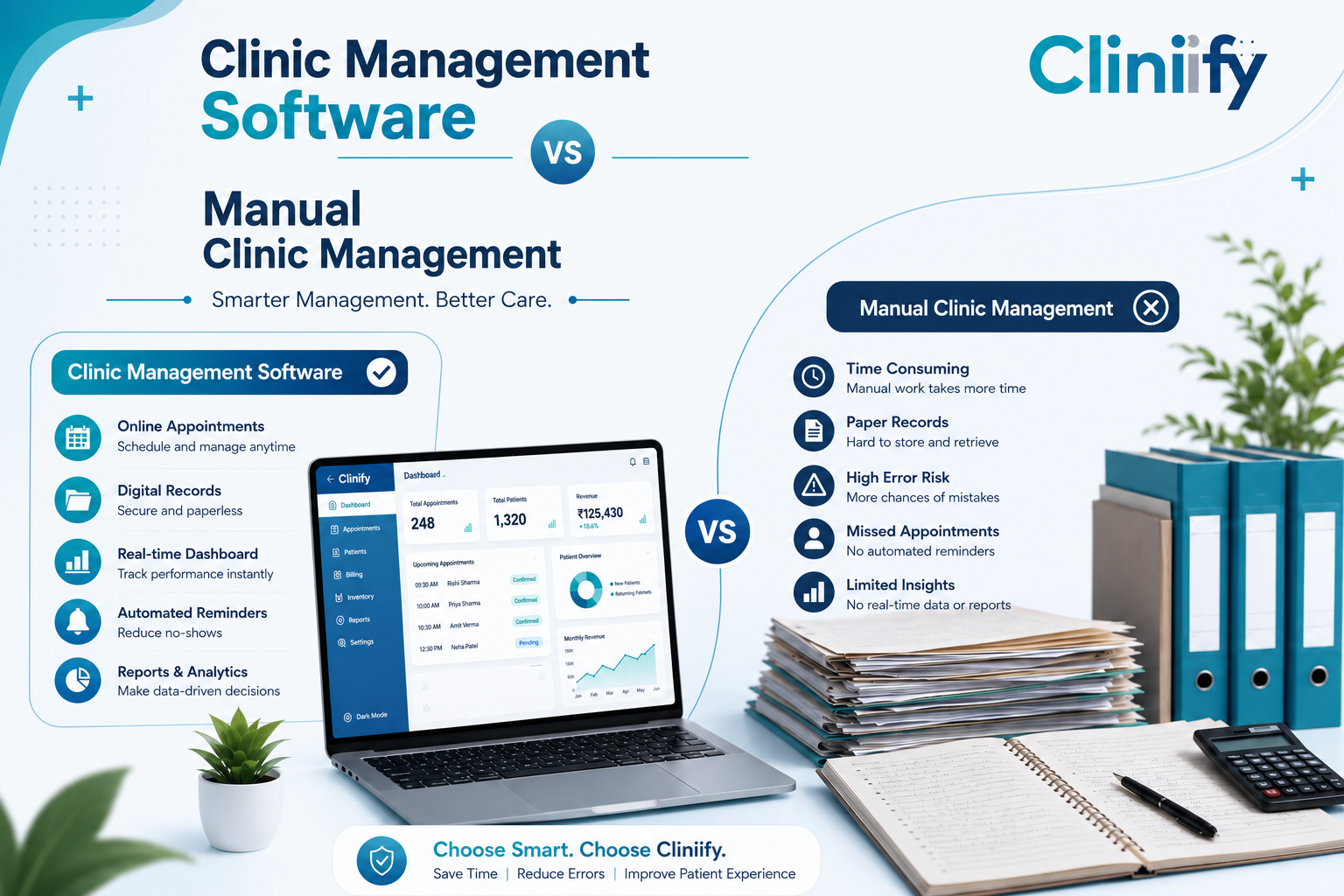
Clinic Management Software vs Manual Clinic Management
Healthcare practices are evolving rapidly, and clinics today face increasing pressure to deliver exceptional patient care while maintaining operational efficiency. For years, many clinics relied on paper records, manual appointment books, and traditional administrative processes. However, the rise of digital healthcare solutions has transformed the way clinics operate.
The debate between clinic management software and manual clinic management is more relevant than ever in 2026. As patient expectations grow and healthcare operations become more complex, clinic owners must decide whether traditional methods can still keep up with modern demands.
Introduction: The Evolution of Clinic Management
Traditionally, clinics managed appointments, patient records, billing, and inventory using physical files and manual registers. While these methods worked for smaller practices, they often created inefficiencies as patient volumes increased.
Today, digital transformation is accelerating across the healthcare industry. From online appointment booking to AI-driven workflows, clinics are embracing technology to improve productivity and patient experiences. This shift has made clinic management software in India an essential tool for healthcare providers looking to stay competitive.
What Is Manual Clinic Management?
Manual clinic management refers to the use of paper-based processes and traditional administrative methods.
Common components include:
- Paper patient records
- Appointment registers
- Manual billing and invoicing
- Physical inventory logs
- Spreadsheet-based reporting
Although familiar, manual systems often result in misplaced records, scheduling conflicts, delayed reporting, and increased administrative workload.
What Is Clinic Management Software?
Clinic management software is a digital platform designed to streamline and centralize clinic operations. It integrates multiple functions into a single system, allowing healthcare providers to manage appointments, patient records, billing, inventory, and reporting efficiently.
Key functionalities include:
- Appointment scheduling
- Electronic Medical Records (EMR)
- Automated billing
- Patient communication
- Real-time reporting
- Inventory management
- AI-powered automation
The best software for clinic management eliminates repetitive tasks and provides clinics with greater visibility into their daily operations.
Clinic Management Software vs Manual Clinic Management: Quick Comparison
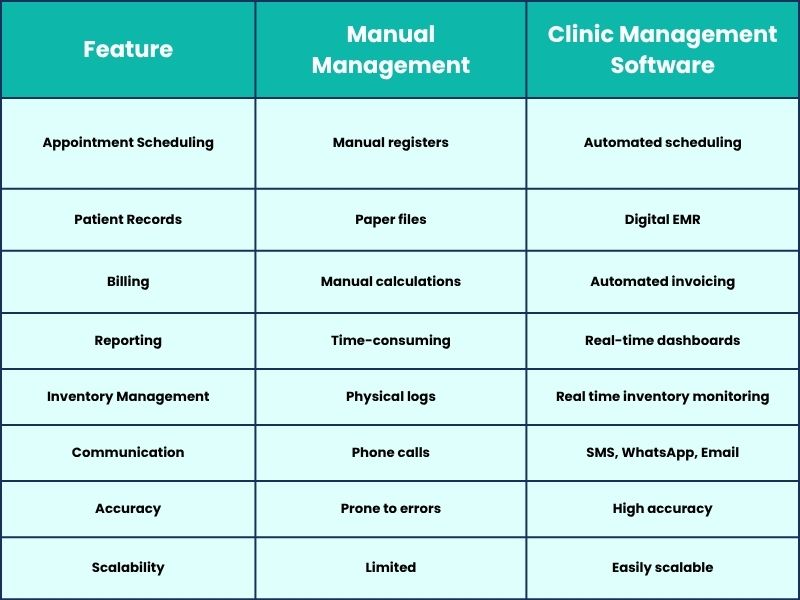
The comparison clearly shows why modern clinics are increasingly moving toward digital solutions.
Modern clinic management platforms offer smart scheduling capabilities that automate appointment booking, confirmations, and reminders.
With Cliniify, clinics can:
- Schedule appointments digitally
- Send automated reminders
- Manage cancellations and rescheduling
- Reduce patient no-shows
This not only improves operational efficiency but also enhances patient satisfaction.
Patient Records Management: Paper Files vs Digital EMR
Paper-based records are difficult to maintain, search, and secure. Lost files and incomplete documentation can negatively impact patient care.
Digital EMR systems provide healthcare professionals with instant access to patient histories, treatment plans, prescriptions, and clinical notes.
Cliniify's EMR system enables clinics to:
- Store patient data securely
- Access records instantly
- Improve clinical decision-making
- Reduce paperwork
This is particularly valuable for clinics seeking a reliable medical clinic management software solution.
Billing and Payments: Manual Calculations vs Automated Billing
Manual billing processes often lead to calculation errors, delayed payments, and administrative bottlenecks.
Automated billing systems simplify financial management by generating invoices, tracking payments, and maintaining accurate financial records.
Cliniify's integrated billing features help clinics:
- Create invoices instantly
- Manage payment records
- Reduce billing errors
- Improve cash flow visibility
As a result, clinics can spend less time on paperwork and more time serving patients.
Staff Productivity: Administrative Burden vs Workflow Automation
A significant amount of staff time is often consumed by repetitive administrative tasks.
Examples include:
- Appointment confirmations
- Record management
- Billing updates
- Inventory tracking
Modern AI powered software helps automate these processes.
With workflow automation and AI-driven assistance, clinics can improve efficiency while reducing staff burnout. Cliniify's intelligent automation tools allow healthcare teams to focus more on patient care and less on administrative work.
Patient Experience: Traditional Processes vs Digital Convenience
Patients today expect convenience and seamless communication.
Manual systems often result in:
- Long waiting times
- Delayed follow-ups
- Limited communication options
Digital clinic management software enhances the patient journey through:
- Online appointment booking
- Automated reminders
- Faster check-ins
- Digital records access
Cliniify helps clinics build stronger patient relationships through consistent communication and engagement tools.
Reporting and Business Insights: Guesswork vs Data-Driven Decisions
Manual reporting is often time-consuming and prone to inaccuracies.
Without real-time data, clinic owners may struggle to understand:
- Revenue performance
- Appointment trends
- Patient retention rates
- Operational efficiency
Modern software platforms provide advanced dashboards and analytics.
Cliniify offers real-time reporting tools that help clinics make informed decisions and identify opportunities for growth.
Cost Comparison: Is Clinic Management Software Worth the Investment?
Many clinic owners assume that manual management is less expensive. However, hidden costs often include:
- Administrative inefficiencies
- Billing mistakes
- Lost patient records
- Missed appointments
- Reduced productivity
The return on investment from automation can be substantial.
By streamlining operations and improving resource utilization, clinic management software delivers long-term savings while supporting business growth.
Why Modern Clinics Are Choosing Cliniify
Healthcare providers need more than basic scheduling software. They require a complete platform that supports every aspect of clinic operations while improving patient care and practice growth.
Modern clinic management software should also include:
Cliniify offers:
- Smart appointment management
- Digital EMR
- Automated billing
- Patient communication tools
- Multi-clinic management
- Axon, an intelligent AI assistant
- Real-time inventory monitoring
- Workflow automation powered by AI
Whether you're looking for dental clinic management software, a medical clinic management software, or the best dental clinic management software for a growing practice, Cliniify provides an all-in-one solution.
Ready to Transform Your Clinic?
Discover how Cliniify can help you improve productivity, deliver better patient care, and grow your revenue with AI-powered clinic management software.
Book a Demo Today and Experience the Future of Smart Clinic Management.
Conclusion
The healthcare landscape in 2026 demands greater efficiency, accuracy, and patient-centric care than ever before. While manual clinic management has served practices for decades, it often struggles to meet the needs of modern healthcare environments.
By contrast, the best clinic management software empowers clinics to streamline appointments, digitize patient records, automate billing, monitor inventory in real time, and gain valuable business insights. It also improves patient communication and reduces the administrative burden on healthcare teams.
Platforms like Cliniify combine advanced clinic management features with AI-powered automation, helping clinics operate smarter and grow faster. For healthcare providers seeking sustainable growth, improved patient satisfaction, and operational excellence, adopting clinic management software is no longer an option—it's a strategic necessity.